
The bill aims to include all the Muslims sects in the Waqf board, Rijiju said.

The Supreme Court of India began hearing a batch of petitions challenging the constitutional validity of the Waqf (Amendment) Act, 2025. The bench, led by Chief Justice Sanjiv Khanna, asked both sides to address whether the court should entertain the petitions or relegate them to the high court. The hearing is underway with senior advocate Kapil Sibal arguing for the petitioners. The act, which was passed by Parliament following heated debates, has been challenged by various parties including AIMIM leader Asaduddin Owaisi, All India Muslim Personal Law Board (AIMPLB), and Jamiat Ulama-i-Hind.

'There's no transparency in work (of the Wakf Board), in property transactions (of the Waqf).'

Following allegations by a section of farmers from Vijayapura district that their lands were marked as Waqf properties, Karnataka Law and Parliamentary Affairs Minister H K Patil on Monday said the notices issued to them will be withdrawn, and the Deputy Commissioner is inquiring into the 'mistake'.

Efforts to resolve three major religious site disputes in Uttar Pradesh - Gyanvapi, Sri Krishna Janmabhoomi-Shahi Eidgah, and Sambhal Shahi Jama Masjid - through out-of-court settlements have failed, with all parties insisting on judicial adjudication.

Several petitions were filed in the apex court challenging the Act, contending that it was discriminatory towards the Muslim community and violated their fundamental rights.
The Allahabad High Court has ruled that the Places of Worship (Special Provisions) Act, 1991, prohibits only the conversion of religious character but does not prevent the state from acquiring such properties for secular and public purposes. This observation came while dismissing a petition challenging the widening and beautification of the Dalmandi area in Varanasi for the Shri Kashi Vishwanath Dham corridor, which involved the proposed demolition of six ancient mosques.

'We are not all Abduls, you know. Our community has any number of retired civil and defence officers, doctors, engineers, lawyers.'

Both factions of the Jamiat Ulema-e-Hind (Arshad Madani and Mahmood Madani) slammed the Bill and expressed grave concerns over the proposed legislation.
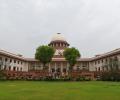
The Indian government has defended the Waqf (Amendment) Act, 2025 in the Supreme Court, arguing that there cannot be a blanket stay on the law as there is a presumption of its constitutionality. The Centre countered the pleas challenging the law's validity, asserting that the amendments were undertaken after a comprehensive study by a parliamentary panel. The government also highlighted the "reported misuse" of earlier provisions and the increase in waqf land, claiming that over 20 lakh hectares were added after 2013.
'It is not as if Hindus are not being touched at all, and only Muslims are.'
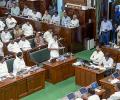
The Tamil Nadu Assembly passed a resolution on Thursday condemning the Centre's proposed Waqf Amendment Bill 2024, calling for its recall. Chief Minister M K Stalin argued that the amendment interferes with religious affairs and would negatively impact the Muslim minority. The resolution was unanimously passed by the Assembly, with support from all parties, including the opposition AIADMK and PMK. The BJP, however, walked out in protest, accusing the ruling DMK of engaging in divisive politics. The bill aims to streamline the Waqf Board's work and ensure efficient management of Waqf properties but has been criticized for potentially encroaching on religious freedom and autonomy. The Tamil Nadu government claims that the amendment would lead to government control over the Waqf Board and its properties, impacting its autonomy and potentially allowing for government acquisition of Muslim-owned lands.

Hitting out at the Congress government headed by Chief Minister Siddaramaiah, he said the ruling party has reached "height of appeasement politics," and alleged that it has in a way made appeasement of minorities its "goal."

A fresh plea has been filed in the Supreme Court challenging the constitutional validity of the Waqf (Amendment) Act, 2025, claiming it was a "blatant intrusion" into the rights of a religious denomination to manage its own affairs in the matter of religion. The plea, filed by Samastha Kerala Jamiathul Ulema, argues that the amendments would distort the religious character of Waqfs and irreversibly damage the democratic process in their administration. Several other petitions have been filed in the apex court challenging the validity of the bill, including those by Congress MP Mohammad Jawed, AIMIM president Asaduddin Owaisi, and AAP MLA Amanatullah Khan.
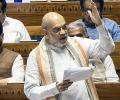
Only four working days are left for the ongoing budget session to come to an end on April 4.

The joint committee of Parliament examining the Waqf (Amendment) Bill submitted its report to Lok Sabha Speaker Om Birla on Thursday. The panel adopted the report by a majority vote, with changes suggested by members of the ruling BJP. Opposition members, who submitted dissent notes, called the exercise an attempt to destroy Waqf boards and termed the bill an attack on the constitutional rights of the Muslim community.
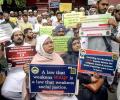
A bench comprising Chief Justice B R Gavai and Justice Augustine George Masih asked senior advocate Kapil Sibal, appearing for those challenging the validity of the law, and Solicitor General Tushar Mehta, representing the Centre, to file their written notes by Monday.

The Nirmohi Akhara has approached the Supreme Court, seeking a directive to the Centre to reconstitute the Shri Ram Janmabhoomi Theerth Kshetra Trust as a 'public trust' and include structural safeguards for oversight by seers, citing alleged large-scale embezzlement of donations.

Opposition MPs, some of whom have given their dissent, slammed the exercise as undemocratic, claiming that they were given little time to study the final report and frame their dissent notes.

It provides for a broad-based composition of the Central Waqf Council and the State Waqf Boards and ensures the representation of Muslim women and non-Muslims in such bodies.

Introducing the bill, Rijiju said the consultation process of the Joint Parliamentary Committee (JPC) was the largest ever exercise carried out by a parliamentary panel in India's democratic history.
The civic body has won a "historic legal battle" that was going on since 1979, said Mayor Pushyamitra Bhargava.

Udai Pratap College in Varanasi is entangled in a land dispute with the Uttar Pradesh Sunni Central Waqf Board, which claims a mosque on the campus and surrounding land as Waqf property. The college administration rejects the claim. The dispute dates back to 2018 when a notice was sent to the college alleging the mosque and land were donated by the Nawab of Tonk to the Waqf Board. The college claims the mosque was built illegally and the land belongs to a trust. The Waqf Board attempted construction in 2022 but was stopped by police after the college complained. The college also alleges the mosque is stealing electricity. The mosque administration asserts ownership based on the Nawab's donation and claims a mutual agreement for electricity supply. The college, founded in 1909, has a long history of promoting education in the region.

Uttar Pradesh minister Azam Khan on Monday alleged that almost 90 per cent prime properties of the Waqf Board have been "sold to builders by previous Bahujan Samaj Party and Samajwadi party governments" and vowed to bring a legislation to restore them back to the board.

Over one lakh Muslims gathered in Karnataka to protest the Waqf Amendment Act, 2025, which they say erodes the autonomy of Waqf institutions and threatens their rights. The protest, organized by the Karnataka State Ulema Coordination Committee, saw strong opposition to provisions in the amended law that they argue allow for coercive acquisition of Waqf properties. Leaders alleged that the amendment is part of a broader political agenda and urged the community to uphold their legal and constitutional rights.

The house of the BJP Minority Morcha's Manipur president, Asker Ali, was set on fire by a mob allegedly for supporting the Waqf Amendment Act. The incident happened at Lilong in Thoubal district on Sunday night. Ali had expressed his support for the Act on social media on Saturday. An irate mob gathered outside his residence around 9 pm, vandalised it and later set it on fire. Following the incident, Ali posted a video on social media, apologising for his earlier statement. He also expressed opposition to the Act.

The Supreme Court on Friday refused to entertain a fresh plea challenging constitutional validity of the Waqf (Amendment) Act, 2025.
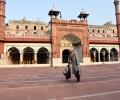
Samajwadi Party chief Akhilesh Yadav said his party would oppose the Centre's move to bring a bill in Parliament to amend the 1995 law governing Waqf boards, and accused the BJP of trying to snatch the rights of Muslims.

The Supreme Court on Monday agreed to consider listing for urgent hearing the petitions challenging the constitutional validity of the Waqf (Amendment) Act, 2025.

A violent clash broke out in Jalesar town in Etah, Uttar Pradesh, after a group of people opposed construction work on a plot of private land near a dargah, claiming it to be Waqf property. The incident on Sunday evening left several people injured and caused significant property damage. Two accused have been arrested and a case lodged against 16 named suspects and around 150 unidentified others.

The Maharashtra State Waqf Board has denied issuing notices to farmers in Latur over land ownership. The notices were issued by the Waqf Tribunal following a claim filed by an individual. The Waqf Board says it has not made any claim on land in any village in Latur district.

The situation in Muslim-dominated Murshidabad district of West Bengal, which was marred by incidents of violence following protests over the Waqf (Amendment) Act, was calm and peaceful on Wednesday with no reports of any untoward incident. Prohibitory orders were clamped in and around Raghunathganj and Suti police station areas and large police force deployed in all sensitive areas of the district, especially in and around Jangipur town, where a large number of people had assembled on Tuesday afternoon, demanding the withdrawal of the legislation. Internet connectivity remained suspended within the areas under the Jangipur sub-division to prevent the spread of any disinformation. Protestors, who had gathered in large numbers on the NH-12 in the Jangipur area to protest against the Waqf Bill, hurled stones at the police who were deployed in the area, on Tuesday afternoon. A couple of vehicles belonging to the police were allegedly torched during the protest and police had to resort to lathi-charge and use tear gas shells to bring the situation under control. A few policemen were injured in the stone pelting. Police have also detained a few people in connection with the incident. West Bengal Governor C V Ananda Bose condemned the incident and said attempts to disturb the law and order situation in the state "should be put down with an iron hand". The opposition BJP alleged that the law and order situation in the state was "crumbling" under Chief Minister Mamata Banerjee, who was busy with "minority appeasement". The Waqf (Amendment) Bill was passed by the Lok Sabha on Thursday, and by the Rajya Sabha in the early hours of Friday after marathon debates in both Houses of Parliament. The Act aims to streamline the management of Waqf properties (assets permanently donated by Muslims for religious or charitable purposes) with provisions to safeguard heritage sites and promote social welfare. It also seeks to improve governance by enhancing transparency in property management, streamlining coordination between Waqf boards and local authorities and protecting stakeholders' rights.
President Droupadi Murmu has given her assent to the Waqf (Amendment) Bill, 2025, which has sparked controversy and legal challenges. The Bill, passed by Parliament after heated debates, has been criticized by opposition parties as "anti-Muslim" and "unconstitutional". The government, however, maintains that the reform will benefit the Muslim community. Several petitions have been filed in the Supreme Court challenging the constitutional validity of the Bill, alleging discrimination against Muslims and undermining their religious autonomy. The Bill repeals the Mussalman Wakf Act, 1923, and introduces restrictions on Waqf properties and their management, which have raised concerns about the impact on the Muslim community.

The Web portal of the Organiser, the RSS mouthpiece, published an article (withdrawn later) that the Christian community holds many acres of land, far more than Waqf property.'

The All India Muslim Personal Law Board (AIMPLB) has announced its intention to challenge the Waqf (Amendment) Bill in court, labeling it a "black law" that threatens the community's rights. The AIMPLB, a major organization representing Muslims in India, asserts that the Bill, if passed, would lead to the seizure of Muslim properties and undermine the autonomy of Waqf Boards. The organization plans to launch nationwide protests against the Bill, echoing the farmers' agitation, and has urged all citizens to resist the legislation. The Bill has been met with criticism from various quarters, including opposition parties, who claim that the Centre is rushing it through Parliament without adequately addressing concerns raised by the Joint Parliamentary Committee (JPC).
'The new Waqf bill sows the seed for conflict in every town and village of India.'
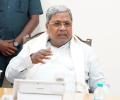
Karnataka Chief Minister Siddaramaiah directed officials on Saturday to immediately retract all notices sent to farmers regarding Waqf land.

The opposition Peoples' Democratic Party and Peoples' Conference targeted the ruling National Conference over the meeting, and accused it of surrendering to the Bharatiya Janata Party without even a pretence over the passage of the Waqf act.

Opposition MPs in the parliamentary committee scrutinising the Waqf (Amendment) Bill are scheduled to meet Lok Sabha Speaker Om Birla on Tuesday to protest its chairperson Jagdambika Pal's alleged 'unilateral' decisions and attempts to 'bulldoze' proceedings, indicating that they may disassociate themselves from the panel.

The Madhya Pradesh High Court referenced the Supreme Court's Ayodhya verdict principles while ruling on the Bhojshala-Kamal Maula mosque complex case, determining the site to be a temple dedicated to Goddess Saraswati.
